By Steve Griffin, CFP® and Kelly Goldstein, CFP®
Many people associate taxes with preparing and filing a return. While tax preparation is important, some of the most impactful decisions occur long before tax season arrives.
At Full Spectrum Financial Group, we view tax optimization strategies as an ongoing component of a comprehensive financial plan. Tax-related decisions can influence retirement income, investment strategies, business planning, and estate planning. Because these decisions often affect one another, we believe taxes should be evaluated within the context of a client’s broader financial goals.
Why Tax Optimization Strategies Extend Beyond Tax Returns
Effective strategies involves making informed decisions that may help improve tax efficiency over time. Retirement timing, income distribution strategies, Roth conversions, business structure, and wealth transfer planning can all have tax implications.
We often work with clients who ask questions such as:
· Should I consider a Roth conversion?
· Is a Backdoor Roth IRA appropriate for my situation?
· How can business owners approach tax planning more strategically?
· How can retirement income be managed in a tax-efficient manner?
The answer to any of these questions depends on a variety of factors, including income sources, asset levels, retirement objectives, business considerations, and estate planning goals. Because every situation is different, tax-related decisions should be evaluated as part of a larger planning process rather than in isolation.
Tax Bracket Management During Retirement
There is a general sense that tax burdens will automatically decline after retirement. In practice, retirement income can come from several different sources, and each may be taxed differently.
Retirement income may include Social Security benefits, pension payments, distributions from retirement accounts, investment income, and other assets. When these sources are not coordinated thoughtfully, retirees may encounter unexpected tax consequences.
We may review opportunities to manage taxable income during retirement and identify areas where strategic planning may be beneficial. In some cases, clients may consider strategies such as Roth conversions or capital gain harvesting during years when taxable income is lower. The goal is to evaluate whether these opportunities support long-term financial objectives while taking current and future tax considerations into account.
Understanding Roth Conversions
Roth conversions continue to be a topic of interest for many investors. A Roth conversion involves transferring assets from a traditional retirement account into a Roth IRA and paying any applicable taxes associated with the conversion.
A Roth conversion is not automatically beneficial for every investor. The decision should be based on a careful analysis of both current and future circumstances.
For some families, a Roth conversion may help reduce future required minimum distributions and possibly create an additional source of tax-free retirement income if applicable rules are met. It may also provide greater flexibility when coordinating retirement income strategies.
For others, the immediate tax cost may outweigh the potential long-term advantages. We encourage clients with their tax advisor to evaluate the broader implications before making a decision.
What Is a Backdoor Roth IRA?
Some high-income professionals and business owners exceed the income limits for direct Roth IRA contributions. In certain situations, a Backdoor Roth IRA strategy may provide another path for funding Roth assets.
Although the concept may appear straightforward, there are multiple steps one must take each year—including filing the proper tax forms to track basis—to execute this strategy correctly. There are also important considerations such as existing IRA balances, aggregation rules, and the IRS pro-rata rule that can all affect the outcome of this strategy. With the relatively low contribution level, these factors frequently offset the desire to implement a Backdoor Roth IRA.
In some situations what initially appears to be a simple tax decision becomes more complex when viewed within the context of a client’s entire financial picture. Proper analysis with the help of a tax advisor can help identify potential challenges before implementation.
Tax Optimization Strategy Considerations for Business Owners
Business owners often face unique planning opportunities and responsibilities. While tax deductions remain an important consideration, some of the most significant planning decisions extend beyond annual tax filings.
Areas that may influence a business owner’s tax strategy include:
· Entity structure
· Retirement plan design
· Compensation planning
· Succession planning
· Income timing considerations
We work with business owners to evaluate how tax-related decisions align with broader retirement and business objectives. Coordinating these decisions may help create a more integrated planning approach.
The Importance of Coordinated Planning
One of the challenges families and business owners may face is that financial decisions are often made by multiple professionals working independently.
A CPA may focus on tax preparation and compliance. An attorney may focus on legal documents and estate planning matters. An investment professional may focus on portfolio management.
Each role serves an important purpose. However, important planning opportunities can be overlooked when decisions are evaluated separately.
We work closely with clients and their professional advisors to help ensure that taxes, retirement planning, investment management, estate planning, and business planning support the same overall objectives. Coordinated planning can provide a clearer framework for making financial decisions over time.
Taking a Proactive Approach to Tax Optimization Strategies
It is not about searching for shortcuts or attempting to avoid legitimate tax obligations. Instead, it involves developing a thoughtful strategy that aligns financial decisions with long-term goals.
Many planning opportunities must be evaluated months or even years before they affect a tax return. Waiting until tax season may limit available options.
That is why tax optimization strategies are an ongoing part of our comprehensive planning process. We encourage proactive discussions throughout the year and help clients evaluate how today’s decisions may affect future outcomes.
Please note that neither Full Spectrum Financial Group, nor its financial professionals, provides tax, legal, or accounting advice. Please consult your own tax, legal, or accounting professional before making any decisions.
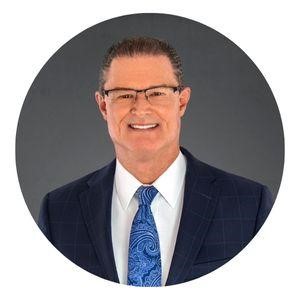
ABOUT STEVE
Steve Griffin, CFP® is Principal and Founder at Full Spectrum Financial Group, a financial firm based in Sarasota, Florida, offering innovative strategies to help clients develop a personalized plan that meets their needs for today and tomorrow. With over 20 years of financial planning experience, Steve creates custom, actionable solutions for his clients’ most complex challenges. From managing a family’s personal wealth to helping business owners focus on their big picture, he finds great fulfillment in empowering clients to make forward-focused decisions and feel more confident in their ability to reach their goals. Listening closely and taking an educated, unbiased approach, he’s able to bring organization and direction to clients’ financial lives.
Steve holds a degree in finance from the University of South Florida. Steve is held to some of the industry’s strictest standards of ethics and education as a CERTIFIED FINANCIAL PLANNER® (CFP®) professional. He’s actively involved in several prominent industry organizations, including National Association of Insurance and Financial Advisors (NAIFA), The Financial Planning Association, The Southwest Florida Estate Planning Council, and The Million Dollar Round Table (MDRT), 2026 which is the Premier Association of Financial Professionals and recognized globally as the standard of excellence for life insurance sales performance in the insurance and financial services industry.
Residing in Sarasota, Florida, Steve and his wife, Trish, enjoy the area’s great restaurants and world-class beaches. Outside of the office, Steve can be found golfing, watching sports, spending time with his daughters, and cheering on his grandkids at their events. With a great appreciation for the healing power of laughter, Steve enjoys watching funny movies or stand-up comedy. He also prioritizes his faith by volunteering at his church and reading Scripture daily. Connect with Steve on LinkedIn or via email at steve@fullspectrumfinancialgroup.com.

ABOUT KELLY
Kelly Goldstein, CFP® is a Financial Planner and Wealth Advisor at Full Spectrum Financial Group, a financial firm based in Sarasota, Florida, offering innovative strategies to help clients develop a personalized plan that meets their needs for today and tomorrow. With a passion for building strategic, holistic plans, Kelly provides clients with clarity, simplifying even the most complex subjects. She enjoys getting to know clients on a personal level and seeing the impact small decisions can make on a client’s financial well-being and progress toward their long-term goals.
Kelly holds a bachelor’s degree from University of Central Florida and an MBA from Saint Leo University. Prior to becoming a financial advisor in 2017, she taught as an adjunct professor for business and marketing courses at Saint Leo University and worked as the office manager and para-planner for her father’s firm. In pursuit of her ongoing commitment to education and self-improvement, Kelly has earned her CERTIFIED FINANCIAL PLANNER® (CFP®) designation.
In her free time, Kelly and her husband, Joe, enjoy golfing, traveling, spending time at the beach, and attending Tampa Bay Lightning hockey games. She is also involved in several industry and community organizations, including the Million Dollar Round Table (MDRT), 2026 the Lakewood Ranch Business Association (LWRBA), the Sarasota Chamber of Commerce, and the Sarasota-Manatee Human Resource Association. Connect with Kelly on LinkedIn or via email at kelly@fullspectrumfinancialgroup.com.
Steve Griffin and Kelly Goldstein are Financial Advisers offering Investment Advisory Services through Eagle Strategies LLC a Registered Investment Adviser and Registered Reps offering securities through NYLIFE Securities LLC FINRA/SIPC, a Licensed Insurance Agency. They are licensed to sell insurance through New York Life Insurance Company and may be licensed with various other independent unaffiliated insurance companies not in all jurisdictions.
Neither Full Spectrum Financial Group, nor NYL, nor its agents, provide tax, legal, or accounting advice. Please consult your own tax, legal, or accounting professionals before making any decisions. Full Spectrum Financial Group is not owned or operated by NYLIC or its affiliates.